
When buying or building a home, you've probably heard advice like "Never buy a south-facing house," "Keep the kitchen in the southeast," or "Sleep with your head towards the south." These recommendations come from Vastu Shastra, India's ancient architectural system that has guided home design for centuries.
But here's the question many homeowners ask today: Is Vastu scientifically proven, or are these simply traditional beliefs?
The answer lies somewhere in between.
Some Vastu principles are deeply rooted in climate-responsive architecture, environmental psychology, hygiene, and passive building design. Others are based on cultural traditions and spiritual beliefs that don't yet have scientific evidence.
In this guide, we'll examine 10 of the most popular Vastu beliefs and explain whether modern science supports them.
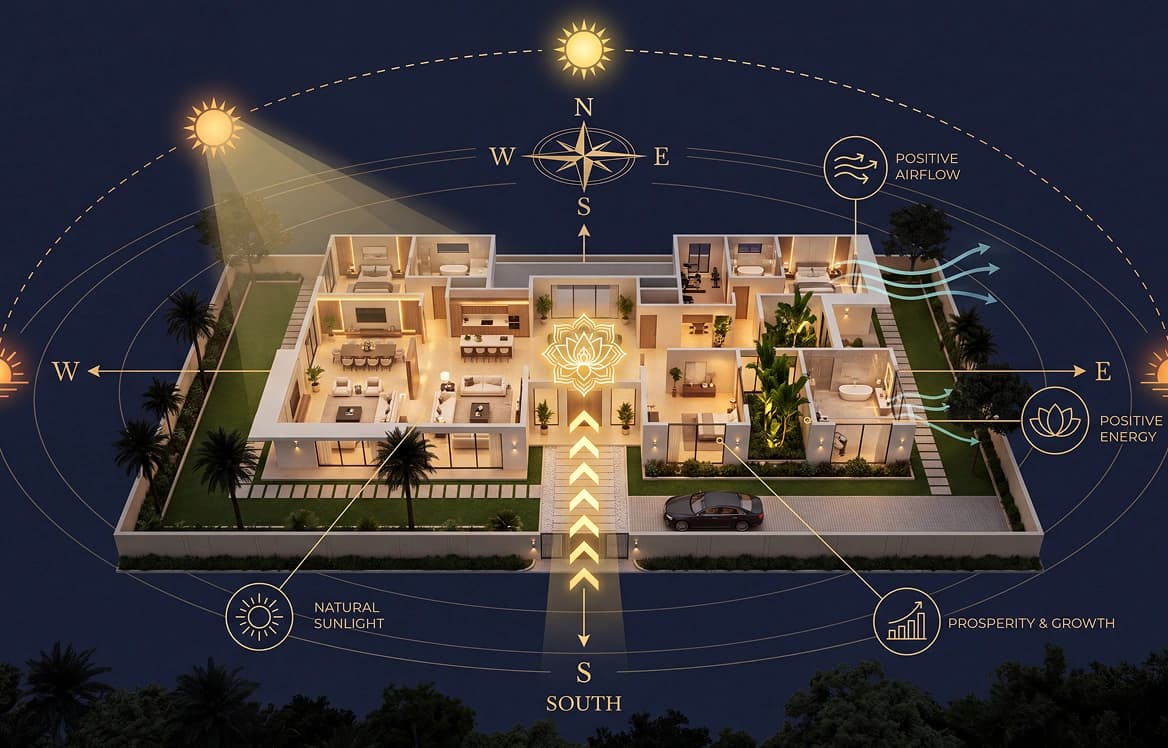
1. Scientific Vastu on South-Facing Homes: Are They Really Bad?
Traditional Vastu Belief
Perhaps no Vastu rule is more widely discussed than the belief that south-facing homes are inauspicious. Many buyers avoid these properties because they associate them with financial problems or negative energy.
Scientific Explanation
From a scientific perspective, a south-facing home isn't unlucky.
In countries like India, south-facing walls receive more direct sunlight during the day. This increases heat absorption, making interiors warmer.
Centuries ago, when homes lacked insulation and cooling systems, this extra heat made south-facing houses less comfortable. Over time, people associated that discomfort with bad fortune.
Today, modern construction techniques—including insulation, ventilated facades, reflective roofing, and energy-efficient windows—eliminate most of these issues.
Scientific Verdict: The challenge is solar heat gain, not bad luck.
2. Why Does Vastu Recommend a Southeast Kitchen?
Traditional Vastu Belief
Vastu considers the southeast the ideal direction for kitchens because it represents the fire element.
Scientific Explanation
Morning sunlight naturally reaches the southeast portion of a house.
This helps:
- Reduce moisture
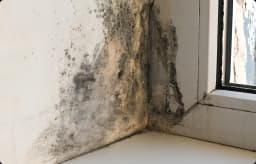
- Prevent mold growth
- Improve kitchen hygiene
- Keep cooking spaces naturally illuminated
Modern architects also prefer naturally lit kitchens because they reduce energy consumption and improve usability.
Scientific Verdict: Supported by environmental design principles.
3. Does Sleeping with Your Head Towards the South Improve Sleep?
Traditional Vastu Belief
Sleeping with your head facing south is believed to improve health and promote peaceful sleep.
Scientific Explanation
Many people believe Earth's magnetic field affects the body during sleep. However, scientific research has not conclusively proven this claim.
What science does confirm is that sleep quality depends on:
- Comfortable room temperature
- Darkness
- Noise levels
- Mattress quality
- Consistent sleep routines
Scientific Verdict: Limited evidence for direction; strong evidence for sleep environment.
4. Why Does Vastu Recommend Keeping the Centre of the House Open?
Traditional Vastu Belief
The Brahmasthan - the center of the house - should remain open and uncluttered.
Scientific Explanation
An open central space is not a spiritual requirement so much as a planning one.
Keeping the middle of a plan clear improves:
- Air circulation
- Natural light distribution
- Ease of movement
- Spaciousness
Modern homes increasingly use open layouts because they create healthier and more comfortable interiors.
Scientific Verdict: Strong architectural reasoning.
5. Why Is an East-Facing Entrance Considered Good in Vastu?
Traditional Vastu Belief
East-facing entrances are believed to invite prosperity and positive energy.
Scientific Explanation
Morning sunlight offers measurable health benefits.
Natural morning light helps regulate circadian rhythms, improves mood, and reduces dependence on artificial lighting.
This makes east-facing entrances beneficial from both health and energy-efficiency perspectives.
Scientific Verdict: Supported by daylight science.
6. Is There a Scientific Reason for Keeping Water in the Northeast?
Traditional Vastu Belief
Water tanks and wells should be located in the northeast.
Scientific Explanation
The northeast generally receives less harsh afternoon sunlight.
Historically, this helped:
- Keep stored water cooler
- Reduce evaporation
- Improve water preservation
Although modern plumbing has reduced its importance, the recommendation likely evolved from practical observation.
Scientific Verdict: Historically logical.
7. Does Decluttering Your Home Improve Positive Energy?
Traditional Vastu Belief
Clutter blocks positive energy.
Scientific Explanation
Psychologists have reached a similar conclusion - minus the spiritual explanation.
Research links clutter with:
- Increased stress
- Reduced productivity
- Higher anxiety
- Mental fatigue
Minimalist interiors improve focus and emotional well-being.
Scientific Verdict: Supported by environmental psychology.
8. Why Does Vastu Keep Toilets Away from Kitchens?
Traditional Vastu Belief
Bathrooms should not be located next to kitchens.
Scientific Explanation
This recommendation originated long before modern sanitation.
Separating toilets from cooking areas reduced contamination risks and improved hygiene.
Even today, architects follow similar planning principles.
Scientific Verdict: Strong public health reasoning.
9. Why Should Large Trees Not Block the Entrance?
Traditional Vastu Belief
Large trees directly in front of the entrance are discouraged.
Oversized trees near entrances may:
- Block sunlight
- Reduce ventilation
- Increase moisture
- Promote mold growth
- Obstruct visibility
However, trees placed strategically around the house improve cooling and air quality.
Scientific Verdict: Depends on placement, not superstition.
10. Why Does Scientific Vastu Emphasize Ventilation?
Traditional Vastu Belief
Homes should have ample windows for fresh air and sunlight.
Scientific Explanation
Cross ventilation remains one of the most important principles in sustainable architecture.
Benefits include:
- Improved indoor air quality
- Lower humidity
- Better thermal comfort
- Reduced energy bills
- Healthier living conditions
Many green building certifications prioritize these exact design principles.
Scientific Verdict: Fully supported by modern building science.
Is Scientific Vastu Really Scientific?
The answer depends on which principle you're examining.
Several Vastu recommendations, including natural lighting, ventilation, hygiene, open layouts, and passive cooling are supported by architecture and environmental science.
However, claims that a specific direction automatically brings wealth, success, or bad luck remain matters of personal belief rather than scientific fact.
The real strength of Vastu lies in its observation of nature and climate, not necessarily in supernatural outcomes.
Conclusion
Scientific Vastu is best understood as a blend of traditional wisdom and practical design principles. While many ancient beliefs cannot be validated through modern research, several recommendations align remarkably well with contemporary architecture, environmental psychology, and sustainable building practices.
Instead of focusing solely on the direction of a home, homeowners should prioritize factors that truly impact daily life, natural light, ventilation, insulation, hygiene, thermal comfort, and efficient space planning. These evidence-based principles create healthier, more comfortable, and energy-efficient living spaces.
Ultimately, the value of Scientific Vastu lies not in promises of luck or prosperity but in its ability to encourage thoughtful, climate-responsive home design. By combining the best of traditional knowledge with modern science, you can build a home that supports both your lifestyle and your well-being.